This comprehensive guide unveils exactly how much money each player starts with in Monopoly and why mastering its distribution is key to victory. Discover official denominations, explore common house rules that impact initial cash, and learn advanced strategies for efficient money management throughout your game. We dive deep into optimizing your financial moves from property acquisition to navigating bankruptcies. Understand the game's economic flow, ensuring you build wealth and dominate the board like a seasoned pro. Perfect your setup and strategize your cash flow to win every time. This article will elevate your Monopoly game, providing insights into variations across editions and how to adapt your financial tactics. Get ready to transform your game night into a masterclass in economic strategy.
Related games- How to Get Out of Story Mode in GTA 5 Guide
- Guide to Roblox 1867 Exploring Historical Worlds
- Guide to GTA 5 Princess Robot Bubblegum Secrets
- How to Make Roblox Use More GPU Guide Boost Your FPS
- Is 24 ghz Mouse Good for Gaming? Your Guide
- Q: How much money does each player start with in Monopoly? A: Each player officially starts with $1500 in Monopoly. This is distributed in specific denominations to ensure a balanced initial economy for property acquisition and early game transactions.
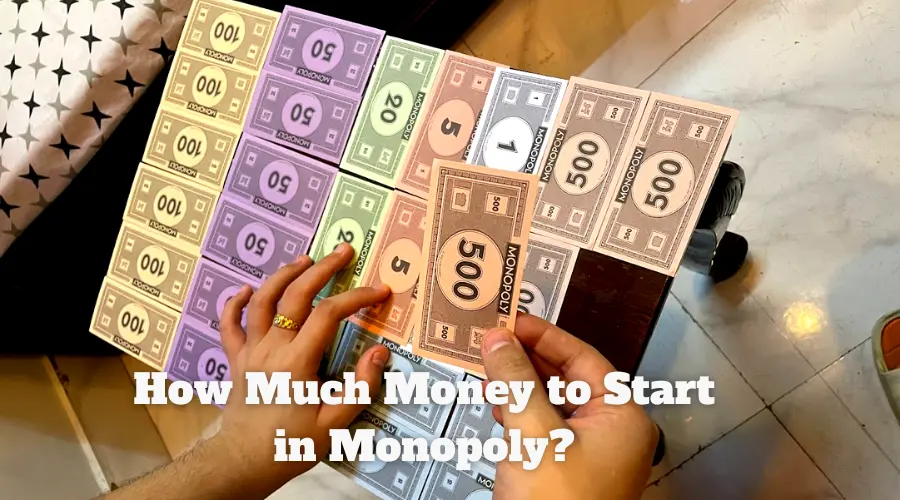
- Q: What are the exact denominations of the starting Monopoly money? A: Players receive two $500s, two $100s, two $50s, six $20s, five $10s, five $5s, and five $1s at the beginning of a standard game.
- Q: Can starting money vary in different Monopoly editions or versions? A: Yes, while classic uses $1500, some special or digital editions might alter the starting cash or even use electronic funds to fit unique themes or streamline gameplay. Always check the specific rules.
- Q: Is it common for house rules to change the initial money distribution? A: Absolutely. Many gaming groups use house rules, such as providing more starting cash or a different mix of bills, to modify game length or intensity, making gameplay unique to their group.
- Q: What is the bank's role in managing money throughout a Monopoly game? A: The bank holds all money not in players' hands, pays salaries, collects taxes, handles property sales and auctions, and provides funds for mortgages and building houses, serving as the central financial hub.
- Q: How do you properly set up the Monopoly bank's money at the game's start? A: After each player receives their $1500 starting funds, the banker should sort all remaining money by denomination into clearly organized stacks. This ensures quick and accurate transactions for property purchases, rent, and other game actions.
- Q: Does the initial amount of money influence a player's long-term Monopoly strategy? A: Definitely. More starting money allows for quicker property acquisition and development, potentially leading to a faster-paced game. Less money can make the early game more challenging, requiring greater financial discipline and strategic property selection.
Ever felt that familiar pang of frustration as you set up Monopoly, wondering if you've given everyone the right amount of cash? Or perhaps you're a seasoned gamer, optimizing every aspect of your play, and you know that mastering the initial financial setup is as crucial as understanding any game's meta. Just like configuring your gaming rig for peak performance or perfecting your controller settings, knowing precisely how much money in a Monopoly game each player starts with, and how to manage it, is fundamental to a dominant strategy. In the bustling world of US gaming, where 87% of gamers regularly log in over 10 hours a week, and social gaming remains a powerhouse alongside esports, perfecting classic board games like Monopoly offers a unique blend of relaxation and competitive skill-building. This guide is crafted for you, the astute gamer who values efficiency, strategic depth, and wants to eliminate setup guesswork to get straight to the fun and skill-building aspects. We'll dive deep into the official rules, explore common house rule variations, and offer pro-level insights into money management that will transform your next Monopoly session from a casual roll-and-move to a calculated economic conquest.
Understanding the game's economic foundation is not just about avoiding arguments; it's about building a robust strategy from the very first roll. This article will provide comprehensive answers to all your questions about Monopoly money, ensuring you're equipped with the knowledge to manage your finances expertly, anticipate your opponents' moves, and ultimately, corner the market. Forget the hype and focus on solid, actionable information that enhances your gameplay. Let's get started on becoming the ultimate Monopoly mogul.
How Much Money Do You Start With In A Standard Monopoly Game?
In a standard, classic edition of Monopoly, each player officially begins the game with exactly $1500. This amount is crucial as it forms the initial capital for acquiring properties, paying rent, and navigating the early game economy. This consistent starting fund ensures a fair and balanced beginning for all participants, setting the stage for strategic choices rather than random luck determining early advantages. For many gamers, knowing this precise figure is the first step in competitive play, avoiding common setup issues that can derail a game before it even properly begins. This $1500 is your foundational war chest, ready to be deployed into the game's real estate market.
The distribution of this initial $1500 is also standardized to ensure players have a mix of denominations for immediate transactions. Having the correct bills prevents early game friction, allowing for smooth property purchases and rent payments. Mastering this initial setup is akin to a pro gamer understanding their starting loadout; it dictates early game flow and potential for aggressive expansion or cautious accumulation. For those who frequently play, committing this detail to memory streamlines the setup process, letting you jump straight into the action faster.
What Are The Official Monopoly Money Denominations And Distribution?
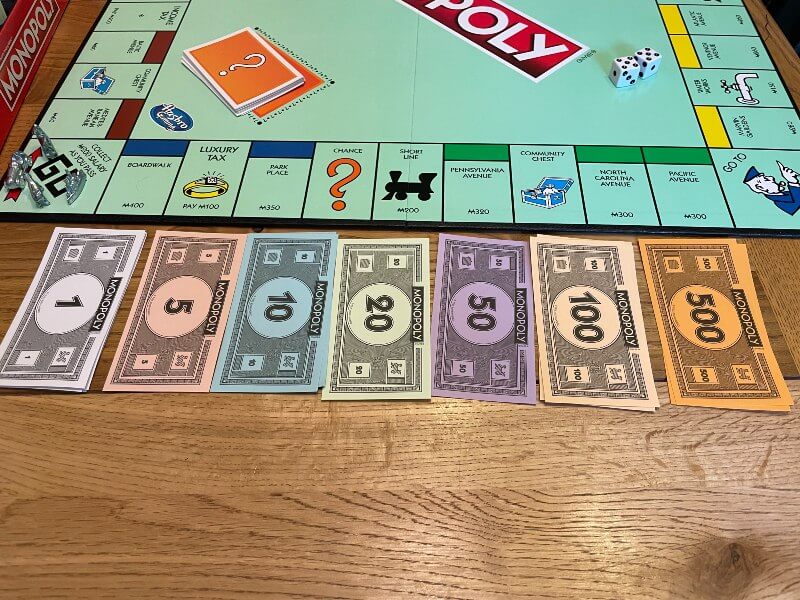
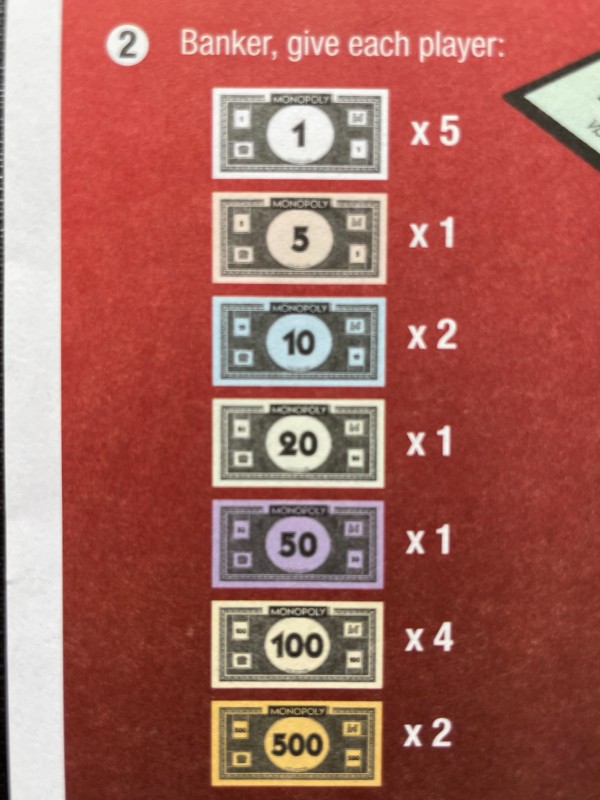
The standard $1500 starting money is not given in a single lump sum but is divided into specific denominations. Each player receives a predetermined set of bills from the Bank. This precise distribution is vital for facilitating all transactions throughout the game, from buying properties to paying rent and taxes. The official breakdown for each player is:
- Two $500 bills
- Two $100 bills
- Two $50 bills
- Six $20 bills
- Five $10 bills
- Five $5 bills
- Five $1 bills
This mix provides players with flexibility for both large purchases and smaller change requirements. It’s designed to balance the game’s economy, allowing for varied strategic expenditures in the early phases. Just like managing your in-game currency in an RPG, having the right denominations at hand can make a difference in efficiency and decision-making during crucial moments. The banker, often a player themselves, is responsible for accurately distributing these funds and managing the remaining bank money, which typically totals around $20,580 in a classic game.
Do House Rules Significantly Change Monopoly Starting Money?
Absolutely, house rules frequently alter the starting money in Monopoly, often to customize game length or intensity. While the official rules dictate $1500, many gaming groups, especially those seeking quicker or more aggressive matches, might agree to different starting amounts. Common house rules include giving players an additional $500 or even $1000 at the start, or providing an initial property. The most famous house rule related to money involves placing all collected fines and taxes under Free Parking, to be claimed by anyone landing on it. This significantly injects more cash into the player economy, often prolonging games and making bankruptcy less likely in the early stages.
These variations are a double-edged sword for the strategic gamer. On one hand, they can alleviate some of the early game financial pressure, allowing for quicker property development and potentially more exciting mid-game bidding wars. On the other hand, they fundamentally shift the game's economic balance, requiring players to adapt their usual strategies. If you're a pro gamer looking to optimize performance, it's crucial to clarify all house rules regarding money before the game begins. This ensures everyone is on the same page and can adjust their tactics accordingly, preventing frustrating setup issues or mid-game disputes that interrupt the fun.
How Does Initial Money Distribution Influence Monopoly Strategy?
The amount of money you start with in Monopoly profoundly impacts your early-game strategy and sets the tone for your entire game. With the standard $1500, players are immediately faced with critical decisions about property acquisition. Do you aggressively buy every property you land on, hoping to complete monopolies quickly? Or do you conserve cash for strategic purchases, perhaps waiting for auctions or specific property sets? Having a fixed, moderate amount of starting cash encourages careful planning and risk assessment.
For the strategic gamer, that $1500 isn't just a number; it's a launchpad for your economic empire. More starting money, as introduced by some house rules, allows for faster property development and potentially quicker game conclusions, as players can invest more aggressively from the outset. Less money, conversely, might force a more cautious, longer-term strategy, focusing on collecting rent and building reserves before making major investments. Understanding this interplay between initial capital and strategic approach is a hallmark of skilled Monopoly players. It informs decisions on which properties to prioritize, when to mortgage, and how to negotiate trades effectively.
What Happens If The Monopoly Bank Runs Out Of Money?
A common concern, especially during longer or more intense Monopoly sessions, is the bank running out of money. However, according to the official rules, the bank can never truly run out of funds. If the physical supply of Monopoly money becomes depleted, the Bank is authorized to issue as much money as needed using simple IOUs or slips of paper. These temporary notes represent the standard denominations and maintain the game's economic flow without interruption.
This rule ensures that the game's integrity and progression are never hindered by a lack of physical currency. It's a pragmatic solution that prevents game stoppages, allowing players to focus on their strategies and the unfolding real estate drama. For gamers who prioritize smooth gameplay and uninterrupted strategy, knowing this rule is empowering. It means you don't need to worry about meticulous money counting for the bank's reserves; the game provides for its own financial continuity. This is unlike some digital versions where the bank's funds are essentially infinite and handled automatically, removing this specific physical limitation entirely.
Are There Differences In Starting Money Across Monopoly Editions Or Digital Versions?
While the classic Monopoly game consistently features a $1500 starting fund, it's important to note that different editions and digital versions can indeed vary this amount. The designers of themed editions, such as those based on popular movies, video games, or cities, often tweak the game's economy to fit the specific theme or to introduce unique gameplay mechanics. This might involve higher starting cash amounts to account for more expensive properties or a simplified monetary system with fewer denominations.
For instance, some modern editions might use a single 'electronic banking' unit instead of physical bills, where all transactions are handled via a card reader. In such cases, the concept of 'starting money' might translate to an initial balance on a player's electronic card, which could be significantly higher than $1500 to reflect the higher value of properties or a faster-paced game. Similarly, digital Monopoly games on mobile platforms or consoles often streamline the money management aspect, automatically distributing funds and handling transactions. These digital adaptations prioritize quick setup and seamless play, which can sometimes involve pre-set higher starting funds or simplified economies to cater to busy gamers looking for a quick session without setup headaches. Always consult the specific edition's rulebook or the digital game's instructions for the definitive starting money amount.
Mastering Cash Flow How Pro Gamers Manage Monopoly Money?
For pro gamers, Monopoly money is not just a means to an end; it's a dynamic resource that requires strategic management from the very first turn. Their approach extends beyond merely having enough cash for rent. They focus on maintaining optimal cash flow, which is the balance between money coming in (rent collected, Go salary, property sales) and money going out (rent paid, property purchases, taxes, house building). A key strategy is to prioritize acquiring monopolies early, even if it means going into debt or making tough trade decisions. Owning a complete color set provides consistent income, which is the lifeblood of a winning Monopoly strategy.
Furthermore, pro players rarely sit on large sums of uninvested cash. Money that isn't earning rent is considered stagnant. They quickly invest in houses and hotels on their monopolies, understanding that these improvements rapidly increase rent collection and accelerate opponents' bankruptcies. They also maintain a 'safety net' of cash, usually enough to cover one or two unlucky high-rent landings, while keeping the rest invested. This balancing act of aggressive investment and strategic saving is crucial. They know when to mortgage properties to raise quick cash for a crucial purchase or to avoid bankruptcy, always with an eye on reacquiring those properties later. This proactive cash flow management is what truly separates casual players from Monopoly masters.
Common Financial Pitfalls To Avoid In Your Monopoly Game?
Even experienced gamers can fall into common financial traps in Monopoly if they're not careful. One of the biggest pitfalls is holding onto too much cash without investing. While a healthy cash reserve is good, large sums sitting idle are not generating income and leave you vulnerable to other players developing their properties. Conversely, another mistake is over-extending too early, buying every property without considering the financial strain. This can lead to quick bankruptcies if you land on high-rent properties before you've established your own income streams.
Ignoring utility and railroad properties can also be a mistake. While they don't offer the high rents of developed color sets, they provide consistent, albeit lower, income and can be powerful bargaining chips in trades. Failing to develop monopolies once acquired is another common error. The real money in Monopoly comes from houses and hotels, not just owning the land. Many players also neglect to strategically mortgage properties when necessary, leading to unnecessary bankruptcies. A smart player uses mortgages as a tactical tool to raise capital for critical investments or to avoid immediate financial ruin. Always remember, every dollar has a purpose in Monopoly; use it wisely to build your empire, not just to survive.
Can Varying Starting Money Create Quicker Or More Intense Games?
Yes, absolutely. Adjusting the starting money is one of the most effective ways to modify the pace and intensity of a Monopoly game. Giving players significantly more starting cash, for example, $2000 or $3000 instead of $1500, often leads to much quicker initial property acquisition. Players can buy properties more freely, leading to faster completion of monopolies and the rapid development of houses and hotels. This accelerates the mid-game and can shorten the overall game duration, which is perfect for busy adults balancing gaming with life commitments.
Conversely, starting with less money could make the early game more intense and challenging. Players would need to be extremely strategic with their initial purchases, relying more heavily on luck, shrewd auctions, and early rent collection to build capital. This slower start might appeal to players who enjoy a grind or a more drawn-out economic struggle. For pro gamers, understanding how these financial tweaks impact game flow allows them to adapt their strategies, whether it's an aggressive land grab in a high-cash game or a calculated, patient build in a low-cash scenario. It's about optimizing the experience to fit the desired playstyle and available time.
The Evolution Of Monopoly Money What Have Modern Editions Introduced?
Monopoly's longevity is partly due to its ability to adapt and evolve, and this includes its money system. While the classic paper currency remains beloved, modern editions have introduced innovative changes. The most notable is the advent of electronic banking. Editions like Monopoly Electronic Banking or Ultimate Banking replace physical cash with plastic bank cards and a central electronic unit. Players swipe their cards to pay rent, collect salaries, and buy properties, mimicking real-world debit card transactions. This eliminates the need for physical money handling, speeding up gameplay and removing any possibility of
Standard Monopoly setup includes $1500 per player, distributed in specific denominations. Official bills: 2x$500s, 2x$100s, 2x$50s, 6x$20s, 5x$10s, 5x$5s, 5x$1s. House rules often alter starting money or bank interactions. Effective money management, strategic property acquisition, and cash flow optimization are crucial for winning. Understanding initial cash flow is foundational for advanced strategies. Modern editions may feature varying economic models or digital money.
35
:max_bytes(150000):strip_icc()/how-much-money-does-bank-have-411884-FINAL-5bbe4b8e46e0fb00511d5cf9.png)
Monopoly Statistics 2026 Monopoly Statistics 2026 . What Monopoly Pieces Are Worth Money At Rebecca Bowens Blog Monopoly Cash 1 1 . How Much Money Comes With A Monopoly Game How Much Money Does Bank Have 411884 FINAL . How Much Money Comes With A Monopoly Game Monopoly UK Starting Money . 2026 Panini Prizm Monopoly FIFA World Cup Soccer Checklist 2026 Panini Prizm Monopoly FIFA World Cup Soccer Board Game

:max_bytes(150000):strip_icc()/how-much-money-does-bank-have-411884_02_2960-62689956a3684e10a1d454f122b456a4.jpg)

How Much Money Does Each Player Get In Monopoly Official Rules 1000854720 . How Much Money Comes With A Monopoly Game How Much Money To Start In. How Much Money Comes With A Monopoly Game How Much Money Does Bank Have 411884 02 2960 . 2026 Panini Prizm Monopoly FIFA World Cup Game Board With Pawns Money S L1600 . Monopoly Legends Of The Board 2026 999 Silver Plated Coin Pack 1024x



Monopoly 2026 Preview . Monopoly 2026 Limited Edition 1 Oz Silver Coin Board Set Agoro By Monopoly . How Much Money Does Everyone Get In Monopoly Official Rules Explained 1000854704 . Monopoly Panini Prizm FIFA World Cup Game I Soccer Board Game With AC SL1500 . MONOPOLY Jackpot 2 Oz Silver Coin 5 Barbados 2026 Monopoly Jackpot 2 Oz Silver Coin 5 Barbados 2026


2026 Panini Prizm Monopoly World Cup Game Card Set Arrive 2026 Panini Monopoly World Cup Soccer Box Cards . Amazon Com Monopoly Deal FIFA World Cup 2026 Edition Game Officially AC SL1500 . Monopoly Deal FIFA World Cup 2026 Edition Card Game Toys And L . Monopoly Pc Game 2026 Download Bonus Review Now Apps On Google Play Th. Giant Monopoly 2026 D9e6a570 2422 4c5b 97d4 @responsive 1600.webp


2026 Monopoly Board Game The Vault Sports Cards And 03 . Monopoly Junior Board Game 2026 2 Games In 1 G18561020 Detail 1 26 S . Monopoly Go Free Dice Links January 2026 GAMES GG Monopoly Go Free Dice Links January 2026 C938dee9d7 . Monopoly 2026 Limited Edition 1oz Silver Coin Board Set NZ Mint Ffcee9e8 D78d 4f19 Bb44 . Monopoly Deal FIFA World Cup 2026 Edition Card Game Monopoly GAME 89042699 Xxl A6

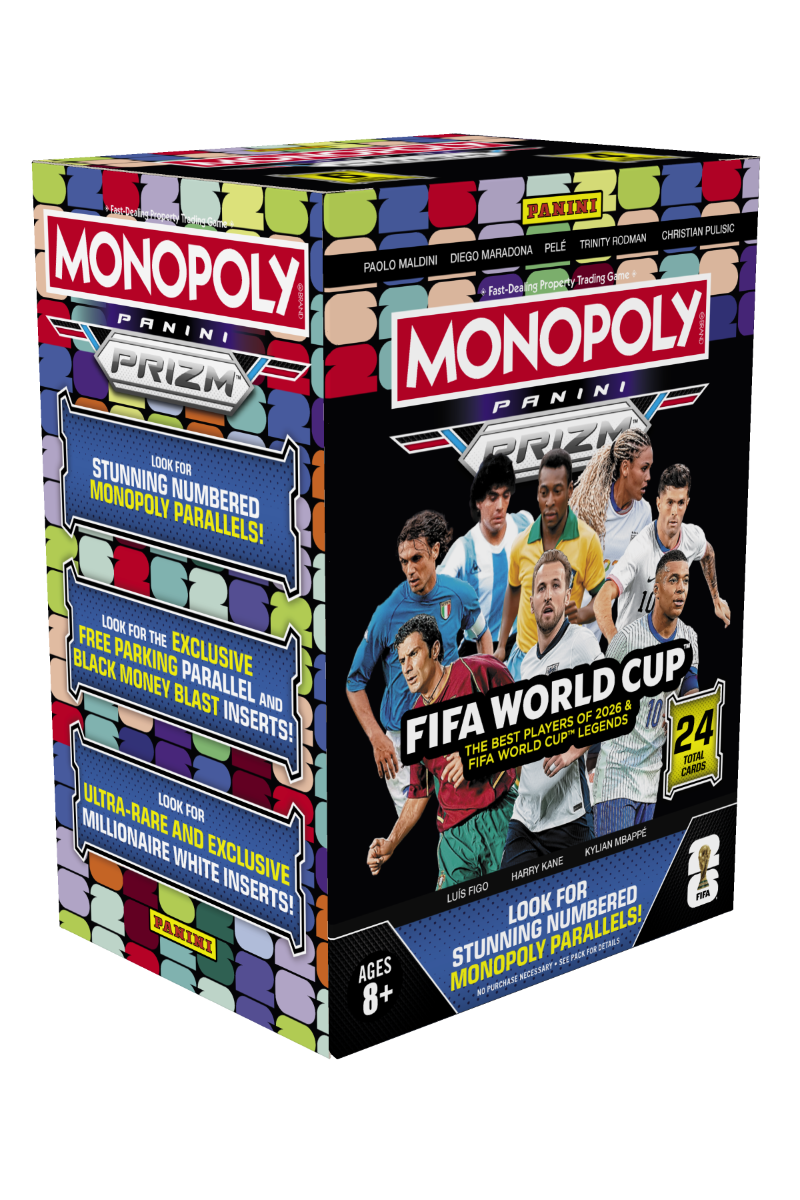
Monopoly 2026 Limited Edition 1 Oz Silver Coin Board Set Agoro By Monopoly BoardSetbox . Monopoly Deal FIFA World Cup 2026 Jeux De Cartes Espritjeu Com Monopoly Deal Fifa World Cup P Image 110733 Grande . World Of Monopoly Com 2026 02t . Coupe Du Monde 2026 Le Monopoly Panini Officiel Cr E D J La Folie 495b3c5a 901a 45aa 8d80. 2026 Panini Prizm Monopoly FIFA World Cup 2026 Trading 25 26 Monopoly Fifa Blaster C2919





How Much Money Comes With A Monopoly Game Monopoly Starting Money . 2026 Panini Prizm Monopoly World Cup Game Card Set Arrive G26771L00 MAIN 25 1024x1024 . How Much Money Is In The Game Of Monopoly Measuring Stuff Thumbnail 1200 x 600 Px 2022 06 640x320 . TIME Magazine 2026 MONOPOLY The World S Greatest Board Game Mr S L960 . Amazon Com Monopoly Panini Prizm FIFA World Cup Game I Soccer Board F5c7da9f D785 4fba A125 PT0 SX300 V1